Which type of boiler is right for your home?
Before choosing a boiler, it helps to know the four main types:
Conventional boiler
Heats your central heating system directly and produces hot water for a storage cylinder, sending heated water to radiators and the hot water cylinder.
System boiler
Works like a conventional boiler, but with key components built in — no separate feed and expansion tank needed.
Combination (combi) boiler
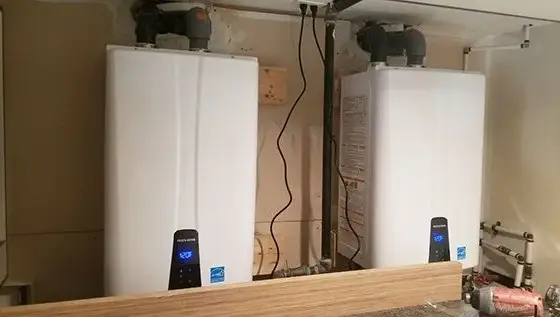
Stores no water at all. It heats water on demand, straight from the mains, for both your taps and your heating.
Condensing boiler
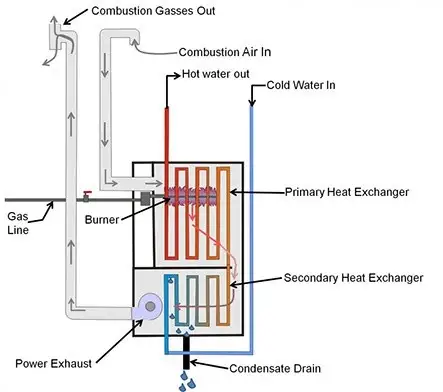
Recovers heat from exhaust gases that would otherwise go up the flue by condensing the water vapour in them — extracting more heat from the same fuel.
Hydronic heating in the Lower Mainland
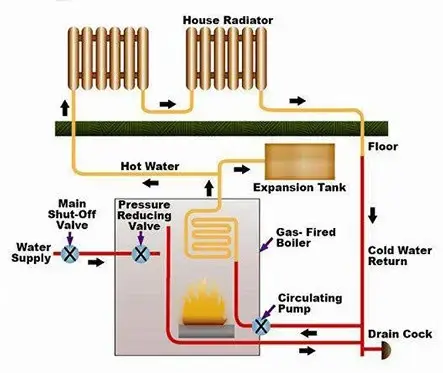
Boilers heat a lot of homes around Vancouver. Older houses in neighbourhoods across Vancouver, Burnaby and New Westminster often still have cast-iron radiators fed by a boiler in the basement. Newer homes, townhomes and many condo buildings use boilers for in-floor radiant heat, which warms floors evenly and quietly with no ducts and no blowing air.
Hydronic systems are comfortable and long-lived, but they're also more involved than a forced-air furnace. Pumps, zone valves, expansion tanks, mixing valves and controls all have to work together, and a problem in any one of them can leave part of the house cold. Our gas fitters work on the whole system, not just the boiler.
Boiler repair, service and installation
Boiler repair
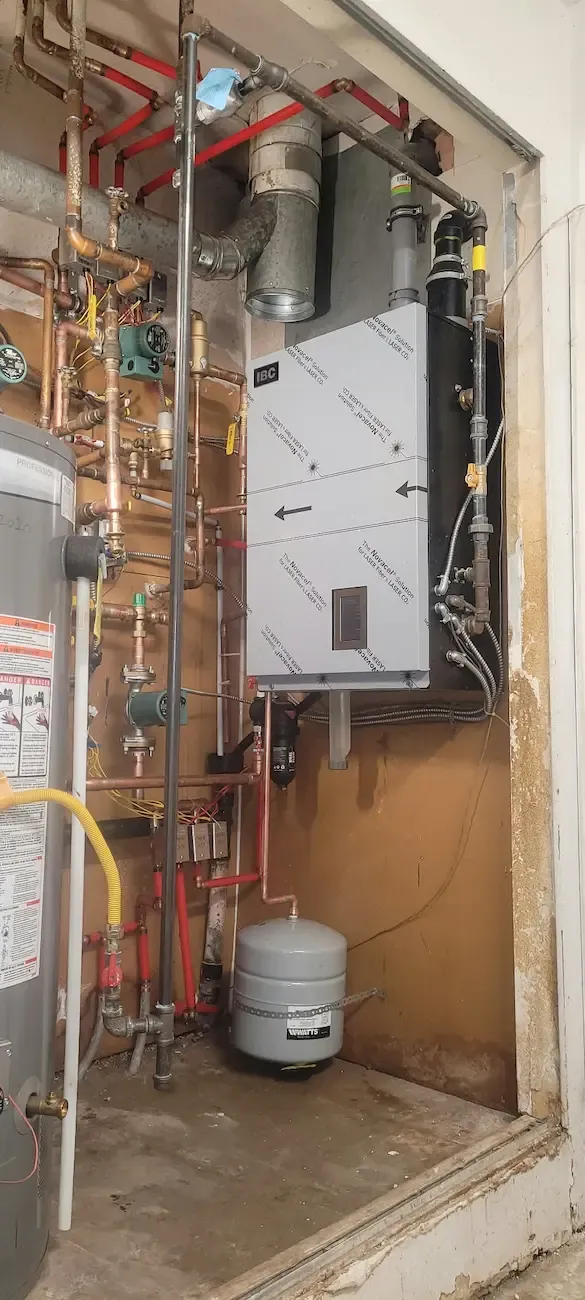
No heat, cold radiators, leaks, pressure loss or banging pipes. We find the cause and repair all makes, including Viessmann, IBC and Rinnai.
Annual boiler service
A full inspection and tune-up of the boiler, controls and venting, with a check for gas and carbon monoxide leaks.
Boiler installation
High-efficiency condensing and combi boilers, sized for your home and installed by Class A and B gas fitters.
Why choose Eco Master for your boiler
- Certified gas fitters licensed by Technical Safety BC
- Experience with radiators, baseboard and in-floor radiant systems
- All makes of residential and commercial boilers
- Clear explanations and upfront pricing before work begins
- Free in-home estimates for boiler replacement
Boiler questions
How often should a boiler be serviced?
Every year. Boiler manufacturers, fire departments and insurance companies all recommend annual inspection and maintenance by a qualified technician, and many warranties exclude damage caused by improper maintenance. An annual service lowers energy costs, catches small problems before they become breakdowns, and helps your boiler last longer. Booking before winter makes sense, since that's when most breakdowns happen.
How long does a boiler last?
Boilers typically last up to about 15 years, and annual servicing gives you the longest lifespan. As a boiler ages it works harder to heat your home, becoming less efficient and more likely to fail. If yours is approaching that age and needing more repairs, it's worth getting a replacement estimate before it gives out in the middle of winter.
Is a condensing boiler worth it?
For many homes, yes. A condensing boiler recovers heat from exhaust gases that a conventional boiler sends up the flue. Typical models run around 90% efficient, compared with roughly 80 to 85% for a new conventional boiler and as low as 60% for some old ones. Venting and the design of your heating system affect whether condensing is the right fit, so it's worth having it assessed.
What's the difference between a combi boiler and a system boiler?
A combi boiler stores no water. It heats water on demand, straight from the mains, for both your taps and your heating, which saves space. A system boiler heats your radiators or in-floor loops plus a separate hot water cylinder, with key components built in. The better choice depends on how much hot water your household uses and the space you have.
Why does my boiler keep losing pressure?
Common causes include a leak somewhere in the system, a faulty pressure relief valve, or a problem with the expansion tank. You may spot drips around the boiler, pipes or radiators, but some leaks are hidden. If the pressure keeps dropping, have a qualified technician track down the cause before it leads to a breakdown or water damage.