The three types of gas fireplace
Millivolt system
Turned on and off with a wall switch, with a standing pilot light — the tiny flame that burns constantly and must be re-lit if it goes out.
Standard system
Operated by physically turning a knob or lever to turn the flame on and off.
IPI system
Intermittent pilot ignition: no pilot until you flip the wall switch, then the pilot lights itself electronically. The newest and most efficient of the three.
The easiest way to tell which system you have is how you operate it. A wall switch means millivolt or IPI; a knob or lever means a standard system. Between millivolt and IPI, the difference is whether a pilot light is burning when the fireplace is off.
Why so many Lower Mainland homes choose gas
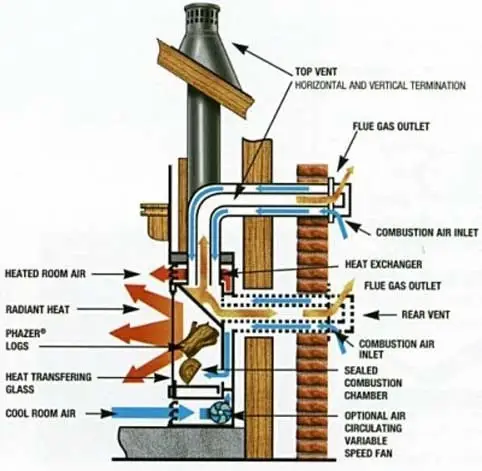
A gas fireplace gives you the look and warmth of a real fire at the flip of a switch, with no wood to haul and no ash to clean. Modern direct-vent fireplaces are sealed from the room: they draw combustion air from outside and vent exhaust back out, so they don't pull warm air out of your home the way an open wood fireplace does.
They're also an efficient way to heat the rooms you actually use. Turning on the fireplace in the living room on a damp Vancouver evening, and letting the thermostat drop elsewhere, can be cheaper than heating the whole house. Many models keep working during a power outage too, since millivolt systems and IPI systems with battery backup don't need household power to light.
Fireplace repair, service and installation
Fireplace repair
Won't light, pilot keeps going out, sooty glass or strange smells. We repair all major brands, including Napoleon.
Annual fireplace service
Cleaning, inspection and safety testing of the burner, pilot, controls and venting, as Technical Safety BC recommends.
Fireplace installation
Gas inserts for existing wood fireplaces, and new gas fireplaces for rooms that have never had one.
Why choose Eco Master
- Certified gas fitters licensed by Technical Safety BC
- Experience with millivolt, standard and IPI systems
- Permits and inspections handled for every installation that needs one
- Free in-home estimates for inserts and new fireplaces
- Serving Vancouver, the North Shore, the Tri-Cities and the Fraser Valley
Fireplace questions
How often should a gas fireplace be serviced?
Technical Safety BC recommends having your gas fireplace professionally inspected and serviced at least once a year. A service cleans the glass, burner and pilot assembly, checks the gas valve and controls, and inspects the venting for leaks, loose connections and blockages such as nests or leaves. Fall is a good time, before you start using it regularly.
Why won't my gas fireplace light?
Common causes include a pilot light that has gone out, a worn thermocouple or thermopile, dead batteries in the remote or receiver, a switched-off gas valve, or a dirty pilot assembly. Check the simple things first, following your owner's manual. If the pilot won't stay lit or you smell gas, stop and call a licensed gas fitter.
Can I convert my wood-burning fireplace to gas?
Usually, yes. For a masonry wood-burning fireplace, the main options are a direct-vent gas insert, vented gas logs, or unvented gas logs. A direct-vent insert most closely replicates a wood fire and is the safest, warmest and most energy-efficient choice. Vented logs are mostly decorative. We can look at your fireplace and talk through what fits during a free in-home estimate.
Which type of gas fireplace do I have?
Look at how you turn it on. A knob or lever means a standard system. A wall switch means either millivolt or IPI (intermittent pilot ignition). To tell those two apart, check for a small flame while the fireplace is off: a pilot that burns constantly points to millivolt, while no pilot until you flip the switch points to IPI, the newest and most efficient type.
Is it normal for a gas fireplace to smell?
A faint odour the first few times you use it each season can be normal as dust burns off. A smell that lingers, or heavy soot on the glass, is worth having checked. A rotten-egg smell can mean a gas leak: leave the house and call 911 or your gas utility from outside. Keep a carbon monoxide alarm alongside your smoke alarms and test it regularly.