Conventional or condensing?
Furnaces fall into two broad types:
Conventional furnace
Exhausts combustion gases fast and hot, so they leave the chimney flue before cooling and condensing. As a result, the heat exchanger doesn't collect as much heat from the fuel as it could.
Condensing furnace
Condenses and drains away water from the exhaust, reclaiming the heat that water holds. Today these are far more common than non-condensing furnaces — and far more efficient.
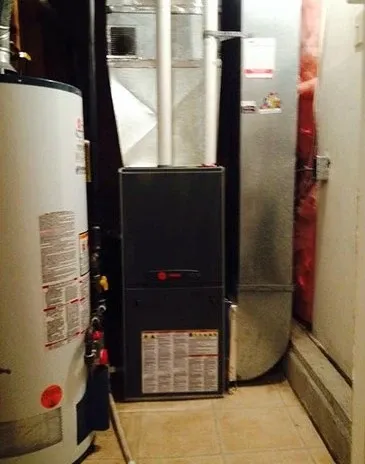
Modern high-efficiency condensing furnaces convert 90% or more of their fuel into heat. The small amount of waste gas is mechanically vented through PVC pipe out the side or roof of the house.
Furnaces in Lower Mainland homes
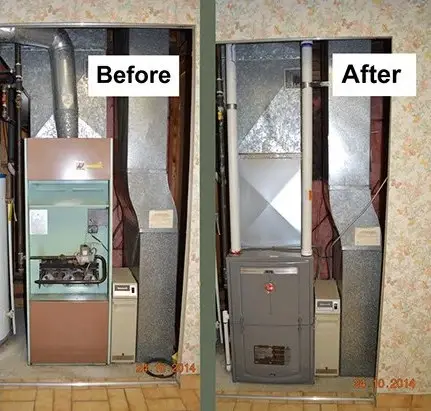
Our winters are mild compared with the rest of Canada, but they're long and damp. A furnace in Vancouver, Burnaby or Coquitlam typically runs from October well into April, so even small losses in efficiency add up over a season. Many homes across the Lower Mainland still have mid-efficiency furnaces from the 1980s and 1990s, and many of those are now past their expected lifespan.
We work on furnaces wherever they're installed: basements, attics, crawlspaces, garages, and the tight utility closets found in townhomes and condos. Each location brings its own venting, clearance and access requirements, and our gas fitters know the code that applies to each.
Furnace repair, service and installation
Furnace repair
No heat, short cycling, strange noises, or a pilot that won't stay lit. We diagnose the real cause and repair all brands, so you're not paying for parts you don't need.
Annual furnace service
A full tune-up and safety inspection: we clean and test the burners, blower and safety controls, and check for gas and carbon monoxide leaks.
Furnace installation
Correctly sized, high-efficiency furnaces from Carrier, Trane, Rheem, Napoleon and more, installed with permits and a full combustion test at startup.
Why homeowners call Eco Master
- Every technician is a certified gas fitter licensed by Technical Safety BC
- We work on all makes and models, old and new
- Straight answers about whether to repair or replace
- Permits handled for every installation that needs one
- Free in-home estimates for new furnaces
- Residential and commercial work, licensed, bonded and insured
Furnace questions
How often should a furnace be serviced?
Once a year. Furnace manufacturers, fire departments and insurance companies all recommend annual inspection and maintenance by a qualified technician. Early fall is a good time, before the heating season starts. A tune-up cleans and checks the burners, blower, safety controls and venting, and it's also a chance to check for gas and carbon monoxide leaks.
Should I repair or replace my furnace?
It depends on age, condition and how often it's needing work. If your furnace is more than 15 years old, it's a good time to start considering replacement, especially if it needs frequent repairs, your gas bills keep climbing, or rooms heat unevenly. A newer furnace with a single failed part is usually worth repairing. A technician can help you weigh the two.
What's the difference between a conventional and a high-efficiency furnace?
A conventional furnace sends hot exhaust up the chimney, taking usable heat with it. A high-efficiency condensing furnace pulls extra heat out of the exhaust and drains away the water that condenses, converting 90% or more of its fuel into heat. Efficiency is rated as AFUE: the higher the number, the more of the gas you pay for ends up heating your home.
What are the signs of a carbon monoxide or gas leak?
Natural gas has an odorant added so it smells like rotten eggs. Carbon monoxide has no smell at all, but headaches, dizziness, nausea or drowsiness that ease when you leave the house can be a sign. If you suspect either, get everyone outside without flipping switches, then call 911 or your gas utility. Working CO alarms are your best early warning.
What size furnace does my home need?
It comes down to your home's heating load: the energy it takes to hold a steady indoor temperature. Insulation, windows, layout and air leaks all play a part, so size shouldn't be guessed from square footage or simply copied from the old unit. An oversized furnace short-cycles and an undersized one can't keep up. We work this out during a free in-home estimate.