Your options for a masonry wood-burning fireplace
Direct-vent gas insert
Most closely replicates a wood fire. Also gives the most heat, is the safest, and is by far the most energy-efficient option.
Vented gas logs
Realistic logs in your existing firebox, vented through the chimney. Mostly decorative.
Unvented gas logs
No chimney required, but with stricter limits on size and use.
For most homeowners, a direct-vent insert is the best choice. It fits inside your existing masonry firebox and vents through two flexible liners run up the old chimney: one brings in fresh combustion air from outside, the other carries exhaust out. Because the unit is sealed behind glass, it doesn't draw warm air out of the room, and it can heat a living space on its own.
No fireplace? No problem
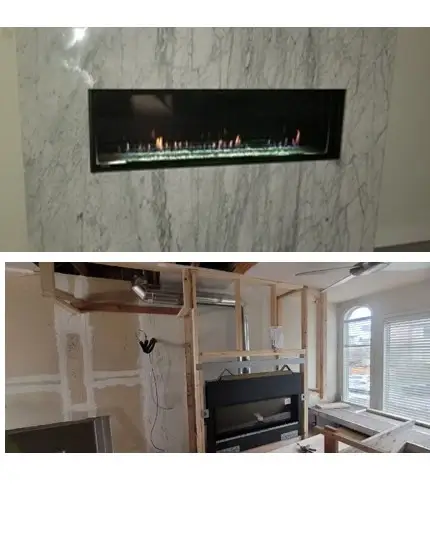
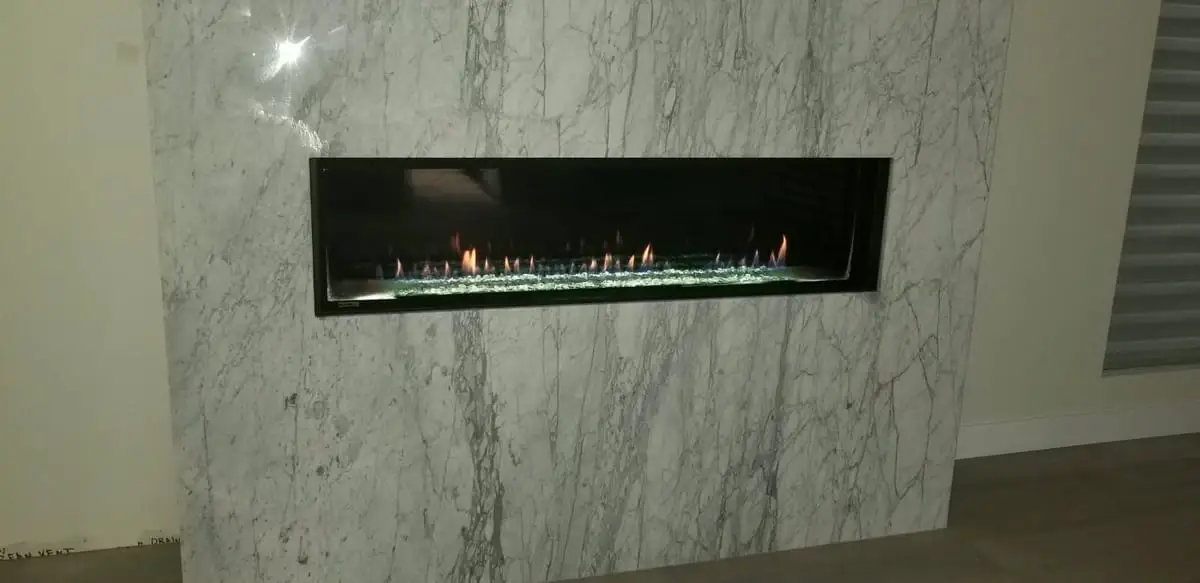
You don't need an existing chimney to enjoy a gas fireplace. Direct-vent fireplaces can vent straight out through an exterior wall, so they can go into living rooms, bedrooms, basements and condos (with strata approval) that have never had a fireplace. See some of our recent installs in the gallery. Linear, contemporary and traditional styles are all available, along with wall-mounted and see-through models.
Choosing a gas insert or fireplace
- Heat output: sized to the room, so it warms the space without overheating it
- Efficiency: a higher rating means more of your gas becomes heat in the room
- Ignition: IPI systems save gas by lighting the pilot only when needed
- Controls: remote, wall switch, thermostat and blower fan options
- Style: firebox size, logs or stones, glass media, and the surround that frames it
What installation involves
- Free in-home estimate and written quote
- Inspection of the existing firebox and chimney
- Gas permit and inspection
- Venting liners or through-wall venting
- New gas line to the fireplace
- Installation of the insert or fireplace
- Startup, safety testing and walkthrough