What we install and service
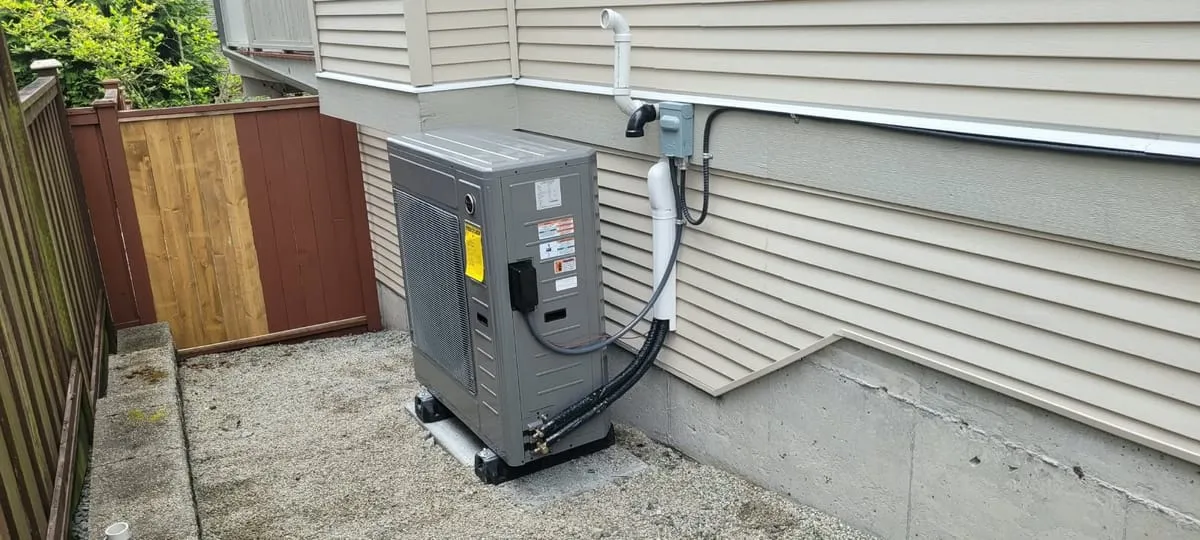
- Ducted air-source heat pumps for homes with existing ductwork
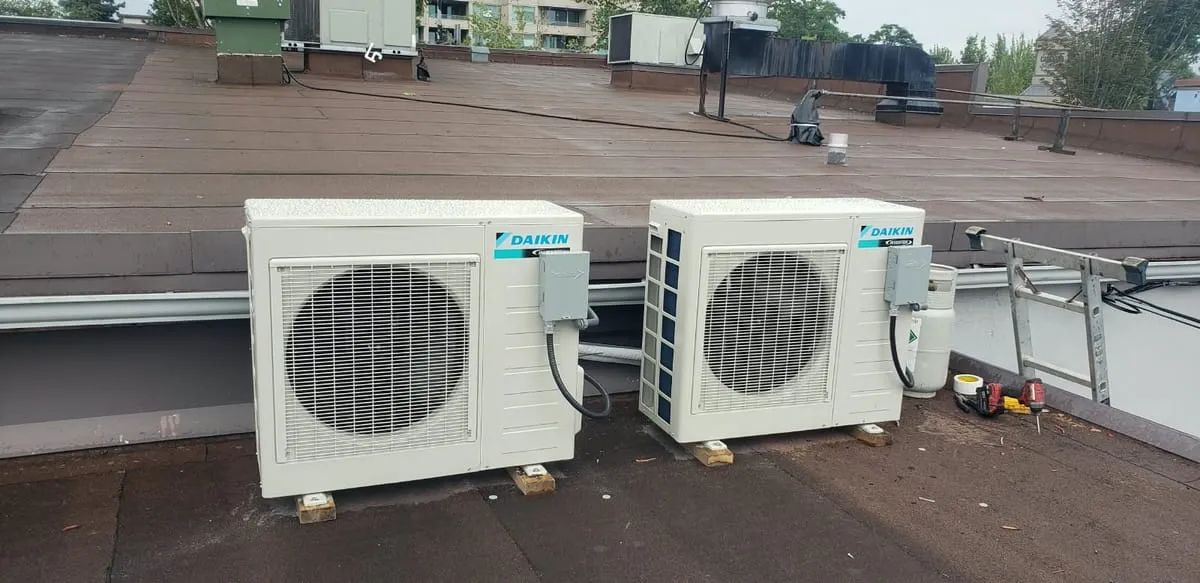
- Ductless mini-split heat pumps for homes, suites, additions and single rooms
- Central air conditioning added to your furnace
- Dual-fuel systems: a heat pump paired with a high-efficiency gas furnace
- Annual heat pump and AC maintenance
- Heat pump and air conditioner repairs, all makes
How a heat pump works
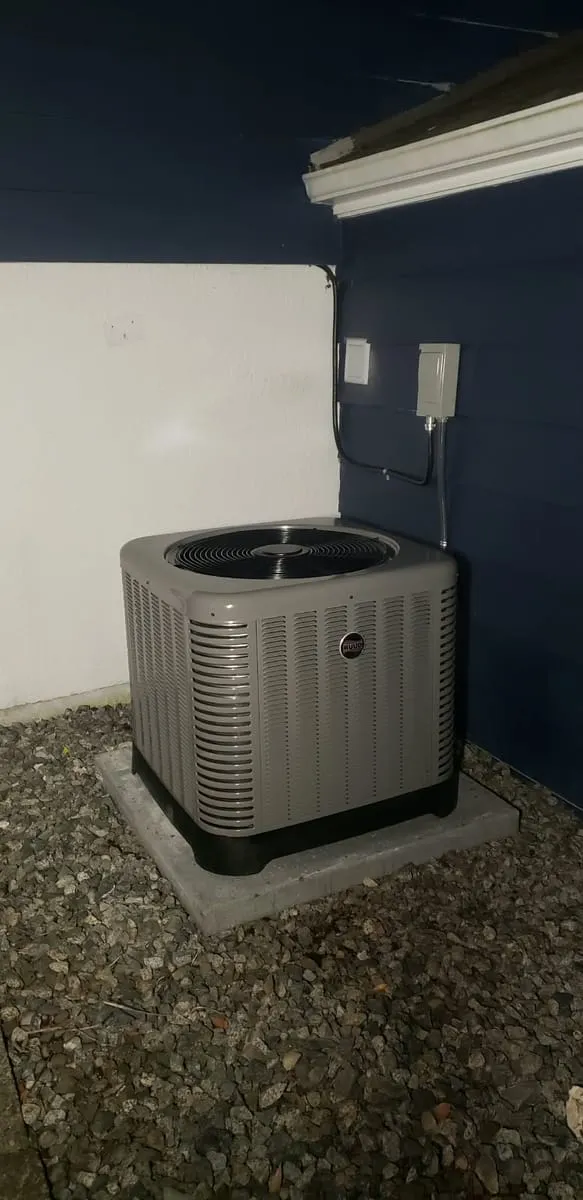
A heat pump doesn't burn fuel to make heat. It moves heat that's already there. In winter it pulls heat from the outdoor air, even on cold days, and brings it inside. In summer it runs in reverse and works like an air conditioner, moving heat out of your home. Because it moves heat rather than creating it, a heat pump can deliver several units of heat for every unit of electricity it uses.
Lower Mainland winters are mild, which suits heat pumps well, and hotter summers mean more homes now want cooling too. One system covers both.
Which system fits your home?
Ducted heat pump
If you have a forced-air furnace, a ducted heat pump uses the same ductwork to heat and cool the whole house. It's often the simplest way to add air conditioning.
Ductless mini-split
Wall-mounted indoor heads connect to an outdoor unit with no ductwork needed. A good fit for homes heated by baseboards or a boiler, basement suites, additions and rooms that never get comfortable.
Dual fuel
A heat pump does most of the heating and cooling, and a gas furnace takes over on the coldest days. As gas fitters, we install and connect both halves of the system.
Central air conditioning
Want cooling only? We add an air conditioner to your existing furnace and ductwork, sized for your home.
How a heat pump installation works
- We visit your home and look at your ductwork, electrical panel and current heating
- We size the system for your home's heating and cooling load, not just its square footage
- We give you a clear, written quote, with options where they make sense
- We take out the permits
- We install the outdoor and indoor units, refrigerant lines, drains and controls
- We start up and test the system and show you how to use it
Keep it running: heat pump and AC service
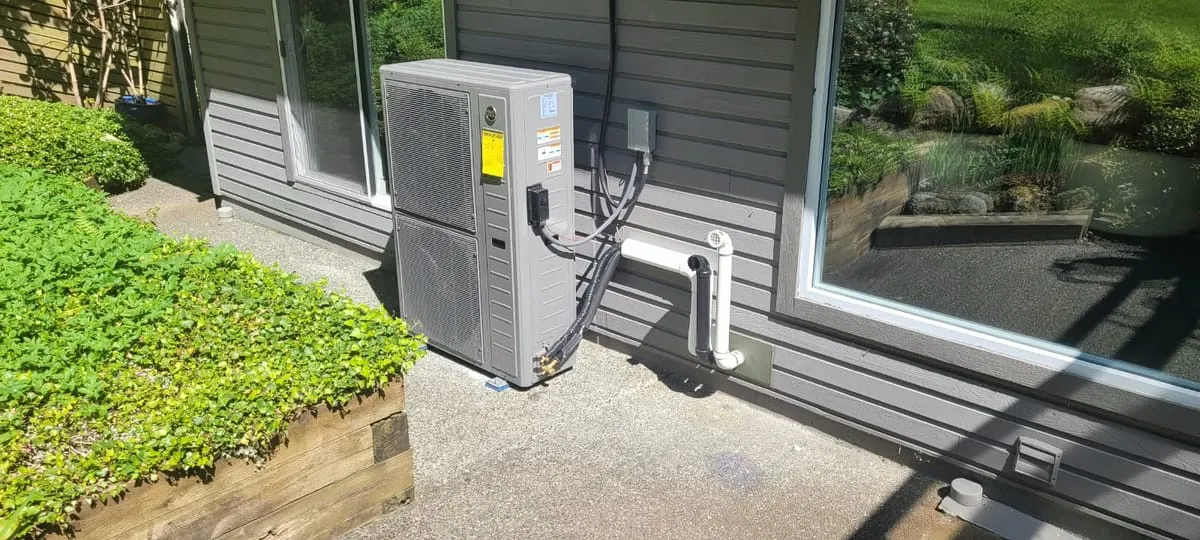
A heat pump runs all year, so it works harder than a furnace or an air conditioner alone. An annual service cleans the coils and filters, checks refrigerant pressures, electrical connections and drains, and tests heating and cooling modes. It keeps efficiency up and catches small problems before a breakdown in the middle of a heat wave or a cold snap.
Rebates
Heat pumps are often eligible for rebates from utility and government programs in BC, especially when they replace an older system. Programs and amounts change, so ask us during your estimate and we'll point you to what's currently available.
Heat pump & AC questions
Do heat pumps work in Vancouver winters?
Yes. Lower Mainland winters are mild, and modern air-source heat pumps keep heating well below freezing. For homes that want a backup on the coldest days, a dual-fuel system pairs the heat pump with a gas furnace that takes over automatically.
Can I add a heat pump to my existing furnace?
Usually, yes. If your furnace and ductwork are in good shape, a heat pump can be added to the same system. It handles most of the heating and all of the cooling, and the furnace covers the coldest days. We check your ductwork and furnace during the estimate to confirm it's a good fit.
What's the difference between a heat pump and an air conditioner?
An air conditioner only cools: it moves heat from inside your home to the outside. A heat pump does the same in summer, and in winter it runs in reverse to bring heat in. If you're adding cooling anyway, a heat pump gives you efficient heating too.
Do I need ductwork for a heat pump?
No. Ductless mini-split heat pumps use wall-mounted indoor units connected to an outdoor unit by small refrigerant lines. They suit homes heated by baseboards or a boiler, as well as additions, suites and individual rooms.
How often should a heat pump be serviced?
Once a year. A heat pump runs in both summer and winter, so it works harder than a furnace or an air conditioner alone. An annual service keeps it efficient, protects the warranty and catches small problems early.